Best Roof Replacement Options: 2026 Guide to Cost & Durability
The installation of a new roof is one of the most significant capital expenditures a property owner will face, representing both a critical protective barrier and a major long-term financial commitment. In an era defined by increasingly volatile weather patterns and a shifting economic landscape, the decision-making process for roofing has evolved from a simple aesthetic choice to a complex exercise in building science and life-cycle cost analysis. A roof is no longer merely “shingles on a deck”; it is a sophisticated, multi-layered assembly designed to manage thermal transfer, vapor pressure, and structural loads over several decades.
For the modern homeowner or facility manager, the primary challenge lies in navigating a market saturated with conflicting manufacturer claims and fluctuating material costs. The rise of sustainable “green” technologies and high-performance composites has expanded the field of play, but it has also introduced new failure modes and maintenance requirements that were nonexistent thirty years ago. Selecting the appropriate system requires an understanding of how specific materials interact with local microclimates and how initial savings can often manifest as future liabilities.
This definitive reference explores the systemic nature of the contemporary building envelope. It moves beyond the surface-level comparison of materials to investigate the underlying physics of roof performance, the economic realities of various installation methods, and the strategic frameworks necessary to ensure an asset’s longevity. By treating the roof as a high-performance component of the home’s overall thermal and structural system, property owners can transition from reactive repairs to proactive, data-driven management.
Understanding “best roof replacement options”
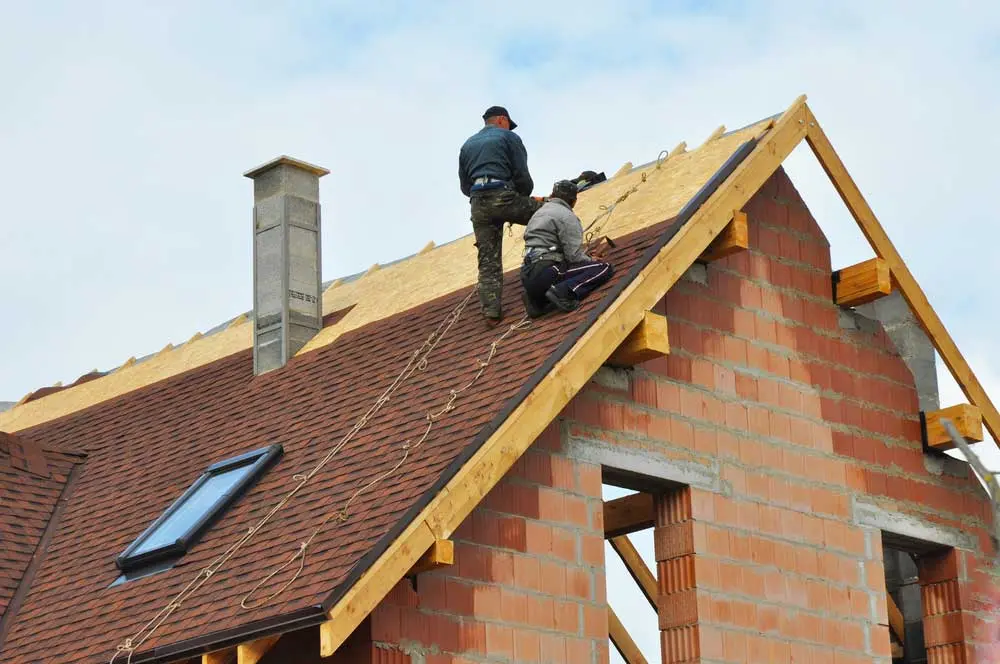
The concept of “best” in the context of roof replacement is inherently subjective and deeply tied to the specific objectives of the property owner. To identify the best roof replacement options, one must first decouple the material’s laboratory performance from its real-world application. A common misunderstanding is the belief that a higher material cost automatically translates to a superior roof. In reality, the “best” option is the one that achieves the optimal balance between initial investment, local climate resilience, and the anticipated holding period of the asset.
Oversimplification in this sector often leads to “systemic mismatch.” For example, installing a heavy natural slate roof on a structure not originally engineered for high dead loads can lead to structural settlement or costly framing reinforcements that far outweigh the benefits of the material’s 100-year lifespan. Similarly, choosing the most expensive metal panels without a plan for integrated ventilation can inadvertently trap moisture in the attic, leading to “attic rain” and premature wood rot.
A professional evaluation of the best roof replacement options must also account for the “transition points”—the valleys, chimneys, and wall lines where 90% of failures occur. A plan that prioritizes a premium shingle but neglects high-grade synthetic underlayment or specialized flashing is a flawed strategy. The “best” system is the one where the weakest component is still robust enough to withstand the maximum expected environmental load.
The Systemic Evolution of the Roofing Industry
Roofing has transitioned from a trade based on traditional “shedding” (water-shedding) to one based on “sealing” (water-tightness). Historically, roofs like wood shakes or slate relied on steep pitches and gravity to move water away from the structure. As building designs became more complex and lower in slope, the industry had to develop more sophisticated membranes and interlocking systems.
The mid-20th century saw the dominance of asphalt shingles—a byproduct of the oil industry—which offered a low-cost, fire-resistant alternative to wood. However, as global temperatures rise and storm intensity increases, the limits of standard asphalt are being tested. This has led to the 2026 “Performance Era,” where we see a massive shift toward “cool” roofing technologies and impact-resistant (Class 4) materials. We are no longer just looking for a roof that doesn’t leak; we are looking for a roof that contributes to the home’s energy efficiency and survives significant hail events.
Conceptual Frameworks and Decision Models
Navigating the 2026 roofing market requires more than a quote; it requires an analytical framework.
-
The Total Cost of Ownership (TCO) Model: This framework calculates the cost per year of service. While asphalt might cost $10,000 for a 20-year life ($500/year), a metal roof might cost $25,000 for a 60-year life ($416/year). TCO shifts the perspective from “upfront pain” to “long-term value.”
-
The Climate Resilience Matrix: This model plots material choices against the three primary local threats: UV degradation (heat), moisture/rot (humidity), and mechanical impact (hail/wind).
-
The R-Value Synergy Model: This framework evaluates how a roofing material interacts with the attic’s thermal envelope. For instance, a “cool roof” is only effective if the attic insulation and ventilation are balanced to prevent heat from conducting into the living space.
Core Material Categories and Performance Dynamics
A thorough investigation into the best roof replacement options necessitates a granular look at material science.
| Material Type | Durability / Class | Maintenance Need | Ideal Climate | Life Span |
| Architectural Asphalt | Moderate (Class 3) | Moderate | Temperate | 20–30 Years |
| Metal (Standing Seam) | High (Class 4) | Low | All (Wind/Fire) | 50–70 Years |
| Natural Slate | Very High | Specialized | Cold/Stable | 100+ Years |
| Synthetic/Composite | High | Low | High UV / Hail | 40–50 Years |
| Clay / Concrete Tile | High | High (Weight) | Arid / Coastal | 50–100 Years |
| Solar Shingles | High (Tech) | Monitoring | High Sun | 25–30 Years |
Realistic Decision Logic
The choice between these categories is rarely purely financial. If the property is in a high-fire-risk zone, the non-negotiable priority is a Class A fire rating (Metal or Tile). If the property is in the “Hail Belt,” a Class 4 impact rating is the primary driver to reduce insurance premiums and prevent frequent replacements.
Environmental Scenarios and Localized Performance
Scenario A: High-Wind Coastal Zones
In coastal regions, wind uplift and salt-spray corrosion are the primary failure triggers. The “best” plan here often involves aluminum (non-corrosive) standing seam panels with high-frequency clip spacing. Asphalt shingles, even if high-rated, are prone to “shingle blow-off” if the adhesive strip fails over time due to salt degradation.
Scenario B: The Snow Belt
In northern climates, ice dams are the systemic enemy. A roof replacement plan must include an “Ice and Water Shield” membrane extending at least 24 inches inside the interior wall line. Metal roofs are often preferred here as they shed snow easily, but they require “snow guards” to prevent dangerous “roof avalanches.”
The Economic Architecture of Roof Replacement
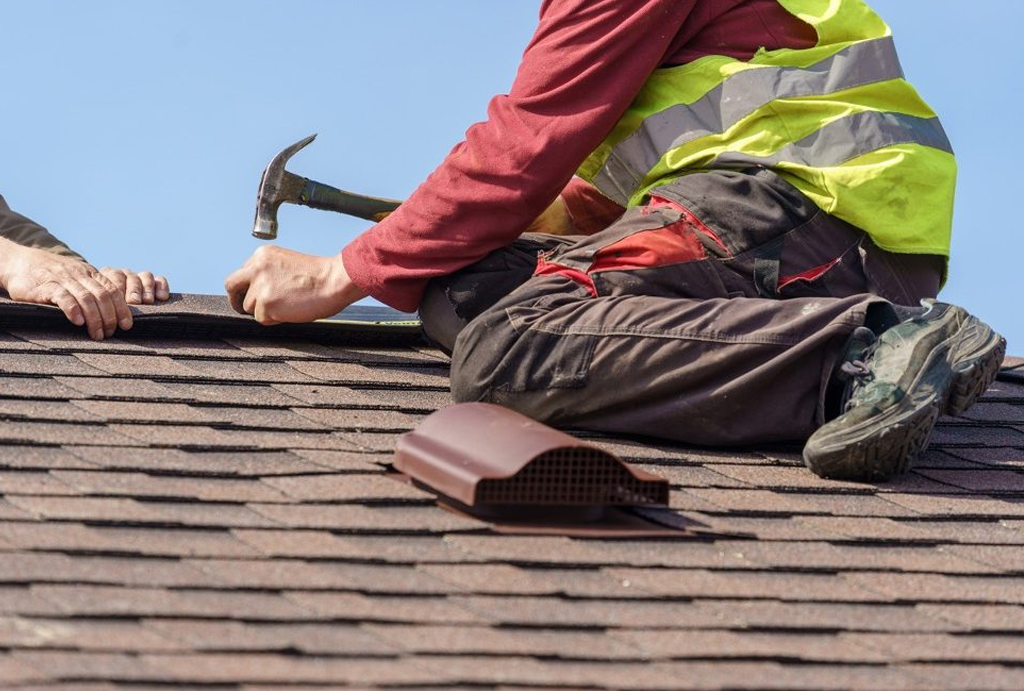
The cost of a roof is divided into three tiers: the visible material, the hidden components (underlayment/flashing), and the “capacity” cost (specialized labor and insurance).
Range-Based Cost Estimates (Per 100 Sq. Ft. / “Square”)
| Component | Asphalt (Basic) | Metal (Premium) | Slate / Tile |
| Materials | $150 – $300 | $600 – $1,200 | $1,000 – $2,500 |
| Labor & Overhead | $250 – $450 | $500 – $1,500 | $1,200 – $3,000 |
| Disposal & Permits | $50 – $100 | $50 – $150 | $100 – $300 |
| Total Per Square | $450 – $850 | $1,150 – $2,850 | $2,300 – $5,800 |
Risk Landscape and Compounding Failure Modes
The failure of a roof is rarely a single-event material collapse. It is usually a compounding series of “micro-failures.”
-
Thermal Shock: Rapid temperature changes cause materials to expand and contract. If the fasteners are too rigid (a common error in DIY metal installs), the panels will “oil can” or pull the fasteners out.
-
Electrolytic Corrosion: This occurs when two dissimilar metals (like copper flashing and aluminum siding) touch. The resulting chemical reaction eats through the metal in a few years.
-
Vapor Entrapment: If a “vapor barrier” is placed in the wrong location for the climate, it traps moisture inside the wood deck, causing the roof to rot from the inside out.
Maintenance Governance and Long-Term Adaptation
A successful roof replacement requires a “Governance Plan” to protect the warranty and the asset.
-
Bi-Annual Clearing: Removing organic debris that traps moisture and fosters algae growth.
-
Flash Point Inspection: Checking the sealant around pipe boots every 5 years; these typically fail long before the roofing material.
-
Storm Audits: After any wind event over 50 mph or hail over 0.75 inches, a professional drone or physical inspection is necessary to document “hidden” bruising.
Common Misconceptions and Oversimplifications
-
“Metal roofs are noisy”: With modern solid-decking and underlayment, the decibel level is identical to asphalt.
-
“I can just roof over my old shingles”: This traps heat, adds weight, and prevents the contractor from inspecting the underlying wood deck for rot. It is almost always a false economy.
-
“Longer warranties mean better roofs”: Warranties are often pro-rated and exclude “acts of God” or “poor ventilation.” The quality of the installation is more important than the paper warranty.
Final Synthesis and Strategic Judgment
The pursuit of the best roof replacement options is ultimately an exercise in risk management. In 2026, the intersection of building technology and climate necessity has made the “cheap roof” a thing of the past. Property owners who view their roof as a passive structural element are increasingly penalized by rising energy costs and insurance premiums.
Strategic judgment dictates that the most successful roof is one that is “over-engineered” for the local climate but “right-sized” for the owner’s financial horizon. Whether choosing the rugged utility of architectural shingles or the multi-generational permanence of stone-coated steel, the objective remains the same: ensuring that the building envelope remains a silent, reliable, and efficient guardian of the life that happens beneath it.