Top Exterior Siding Plans: 2026 Professional Guide to Durable Cladding
The selection of a home’s exterior cladding is rarely a singular event; it is a multi-decade commitment to a building’s structural integrity and thermal performance. In the current architectural climate, homeowners and developers are moving away from the superficial “curb appeal” metrics of the past toward a more integrated approach that treats the building envelope as a sophisticated system. The exterior is the primary defense against atmospheric degradation, and its failure—whether aesthetic or functional—often signals a broader breakdown in the asset’s long-term viability.
Defining a successful approach to house cladding requires an analysis that goes beyond material cost. It involves a synthesis of local climate data, building science principles, and the specific life-cycle expectations of the property owner. A strategy that prioritizes the initial visual impact without accounting for the specialized maintenance requirements of the material will inevitably lead to high friction and depreciating value. Conversely, a purely utilitarian choice may ignore the cultural and market-driven necessity for architectural harmony.
This analysis serves as a comprehensive investigation into the modern landscape of residential protection. It explores the systemic evolution of cladding materials, the hidden costs associated with various installation methods, and the decision-making frameworks necessary to navigate an increasingly complex market. By shifting the focus from “what looks good” to “what performs reliably,” we can establish a standard for durability and design that withstands both environmental and economic shifts.
Understanding “top exterior siding plans”
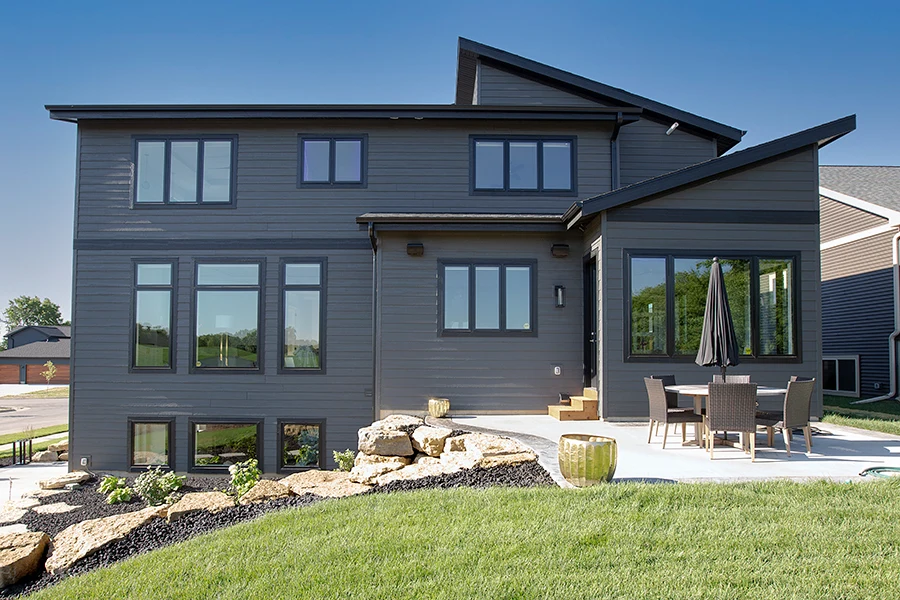
When discussing top exterior siding plans, the term “plan” is often misconstrued as a mere selection of colors or materials. In a professional architectural context, a plan is a comprehensive blueprint that accounts for moisture management, thermal bridging, and the physical interface between the siding and the home’s fenestration. A superficial choice ignores the “rainscreen” principle—the idea that water will inevitably get behind the cladding and must be managed through drainage and ventilation.
A common risk in residential development is the oversimplification of material performance. For instance, high-end fiber cement is often marketed as “fireproof,” but without a plan that includes proper non-combustible underlying layers and specific joint-flashing details, the system as a whole remains vulnerable. The “top” plans are those that treat the siding not as a skin, but as a component of a layered assembly.
Furthermore, the “top” designation is entirely relative to the geographic context. A plan that excels in the humid, salt-spray environments of the American Southeast—where vapor permeability and salt-crust resistance are paramount—would be fundamentally flawed if applied to the freeze-thaw cycles of the Canadian interior. True mastery in siding planning requires an understanding of how materials expand and contract at different rates, a phenomenon known as differential thermal expansion, which can cause buckling or seam failure if not accounted for in the original design.
The Evolution of the Building Envelope
The history of siding is a history of humanity’s attempt to decouple interior comfort from exterior volatility. Early iterations relied on local biomass—primarily timber—which required constant attention and offered limited protection against fire. The transition to masonry provided durability but lacked the versatility and ease of installation required for the post-war housing boom.
The mid-20th century introduced synthetic solutions like aluminum and vinyl. While these were celebrated for their “maintenance-free” promises, they introduced new systemic issues: poor environmental footprints, low impact resistance, and a lack of breathability that often trapped moisture within the wall cavity, leading to “sick building syndrome.”
Today, the industry is in a phase of hybrid optimization. Modern top exterior siding plans leverage composite technology—such as fiber cement and engineered wood—which mimic the aesthetics of natural materials while providing the dimensional stability of industrial products. We are seeing a return to “ventilated facades,” a concept once reserved for commercial skyscrapers, now being integrated into residential plans to ensure that the building can “breathe” while maintaining a high R-value for energy efficiency.
Conceptual Frameworks for Selection
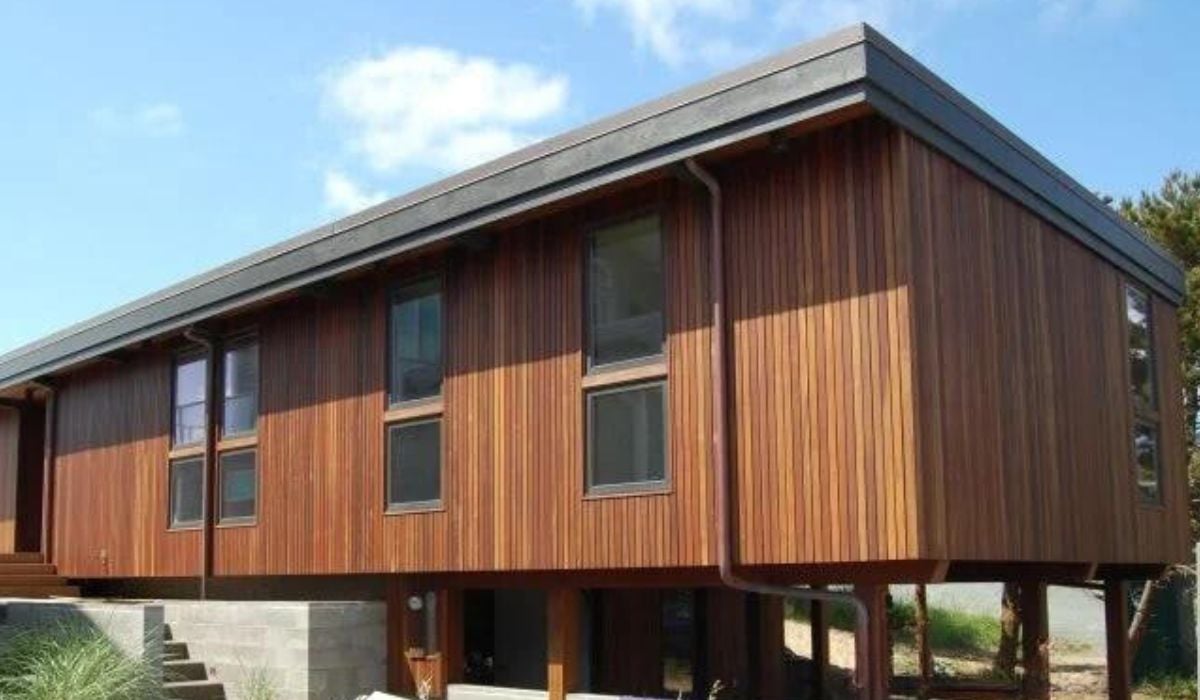
To navigate the myriad of options, one must apply specific mental models that weigh performance against constraint.
-
The Life-Cycle Cost Model (LCC): This framework ignores the initial purchase price in favor of the “total cost of ownership.” It accounts for painting cycles, cleaning costs, and the probability of repair. A material with a higher upfront cost, like specialized brick or high-grade composite, often yields a lower LCC over a 30-year period compared to low-cost vinyl.
-
The Climate-Material Fit Matrix: This model analyzes material properties against local environmental stressors. It evaluates UV degradation rates for plastics, rot resistance for wood, and moisture absorption for masonry.
-
The “Vulnerability Bottleneck” Model: This approach identifies the weakest link in the siding system. It assumes that the siding itself will not fail, but the transitions (corners, windows, and door frames) will. A plan is only as good as its flashing and sealant strategy.
Material Categories and Performance Trade-offs
A sophisticated exterior strategy requires a granular understanding of material science. No single material is a universal solution; each involves a calculated trade-off.
| Material | Durability | Maintenance Level | Eco-Impact | Typical Life Span |
| Fiber Cement | High (Fire/Insect) | Moderate (Requires Paint) | Low/Moderate | 30–50 Years |
| Engineered Wood | Moderate/High | Moderate | Low (Renewable) | 20–30 Years |
| Natural Cedar | Moderate | High (Oil/Stain) | Very Low | 20–40 Years |
| Modern Vinyl | Low/Moderate | Very Low | High (PVC) | 15–25 Years |
| Metal (Steel/Alum) | Very High | Low | Low (Recyclable) | 40–60 Years |
| Stone Veneer | High | Low | Moderate/High | 50+ Years |
Decision Logic
Choosing between these categories depends on the “Performance Priority.” If the priority is fire resistance in a Wildland-Urban Interface (WUI) zone, fiber cement or metal becomes the non-negotiable choice. If the priority is historic accuracy in a protected district, natural wood with a high-maintenance plan is often the only path forward.
Real-World Application Scenarios
Scenario A: High-Humidity Coastal Environments
In regions like the Florida coast or the Australian seaboard, salt-air corrosion and high vapor pressure are the primary threats. A plan here must avoid aluminum (due to pitting) and low-grade vinyl (which can trap humidity). The optimal choice is often high-density fiber cement installed with a rainscreen gap, allowing moisture to escape before it reaches the sheathing.
Scenario B: High-Altitude, High-UV Zones
In the American West, UV radiation is the “silent killer” of siding. It makes vinyl brittle and causes paint to fail prematurely. Here, top exterior siding plans often revolve around pre-finished metal or natural stone. Metal reflects heat and resists UV breakdown, while stone remains structurally indifferent to sunlight.
Scenario C: Extreme Cold and Freeze-Thaw
In Canada or the US Midwest, materials must withstand rapid temperature swings. Masonry can suffer from “spalling” if water enters pores and freezes. Engineered wood is often preferred here because it possesses some elasticity, allowing for minor expansion without structural cracking.
Economic Dynamics: Direct and Indirect Costs
The financial architecture of a siding project is divided into “visible” and “invisible” costs. Direct costs include the material itself and the labor to hang it. Indirect costs are more insidious; they include the cost of structural reinforcement for heavy materials like natural stone, or the increased insurance premiums associated with flammable siding types.
Range-Based Cost Estimates (Per Square Foot Installed)
| Component | Low Range | Mid Range | High Range |
| Basic Material | $3.00 | $8.00 | $15.00+ |
| Professional Labor | $2.50 | $5.00 | $12.00+ |
| Surface Prep/Wrap | $1.00 | $2.50 | $4.00 |
| Total Project | $6.50 | $15.50 | $31.00+ |
Note: These figures vary wildly by region and the complexity of the home’s geometry.
Tools and Strategies for Implementation
Successful execution of top exterior siding plans requires a suite of specialized tools and procedural strategies:
-
Moisture Probes: To ensure the substrate is dry before installation.
-
Integrated Flashing Systems: Moving away from field-cut metal to factory-engineered window pans.
-
Rainscreen Battens: Creating a 1/8″ to 3/4″ air gap behind the siding.
-
BIM Modeling: Using Building Information Modeling to calculate precise material counts and minimize waste.
-
Laser Leveling: Essential for long-run siding (like lap or metal panels) where a 1/4″ error at the base becomes a 3″ error at the roofline.
Risk Taxonomy and Failure Modes
The primary failure in siding is rarely the material rotting away in the center of a wall. Failure is almost always “contextual.”
-
Capillary Action: When siding is installed too close to the ground or a roofline, water “wicking” travels upward into the material.
-
Over-driven Fasteners: In vinyl or engineered wood, nailing too tightly prevents the material from sliding during thermal expansion, leading to buckling.
-
Caulk-Dependency: A plan that relies on sealant to keep water out is a plan destined for failure. Sealants degrade in 5–7 years; the flashing must do the heavy lifting.
Maintenance Governance and Adaptation

A “set and forget” mentality is the most expensive mistake a property owner can make. Maintenance must be governed by a structured schedule.
-
Annual Inspection: Checking for “kick-out flashing” failure and gutter overflows.
-
Cleaning Cycles: Removing organic growth (mildew/algae) which can trap moisture against the surface.
-
Re-painting/Sealing: For fiber cement or wood, this is typically a 7-to-12-year cycle depending on UV exposure.
Evaluation Metrics and Documentation
How do you measure the success of an exterior plan?
-
Thermal Imaging: Post-installation scans can identify if the new siding (and associated wrap) has reduced thermal bridging.
-
Internal Humidity Monitoring: Sensors behind the drywall can detect if the new siding system is effectively managing vapor.
-
Resale Value Appraisal: Comparing the home’s value against neighbors with lower-grade cladding.
Common Misconceptions and Oversimplifications
-
“Maintenance-Free” is a Myth: Every material requires cleaning and inspection. Even stone can suffer from mortar erosion.
-
Vinyl is Always the Cheapest: When accounting for a 20-year lifespan and the likely need for replacement versus the 50-year lifespan of metal or fiber cement, vinyl is often the more expensive choice.
-
Insulated Siding Replaces Cavity Insulation: While it reduces thermal bridging, it is an addition to, not a replacement for, proper wall insulation.
Final Synthesis of Exterior Strategy
The transition toward high-performance home exteriors is a reflection of a broader societal shift toward durability and resource management. Choosing among top exterior siding plans is an exercise in balancing the immediate aesthetic desires of the present with the inevitable environmental stressors of the future.
Ultimately, the “best” siding is not the most expensive one, nor is it the one with the trendiest color palette. It is the system that respects the building’s local climate, utilizes sound building science to manage moisture, and recognizes that the exterior of a home is a dynamic shield that requires periodic attention. A disciplined approach to planning ensures that the home remains a safe, efficient, and valuable asset for generations.