Top Residential Gutter Systems: 2026 Engineering & Cost Guide
The management of storm water is perhaps the most undervalued component of residential structural integrity. While homeowners often direct their attention toward high-visibility upgrades like kitchen cabinetry or interior flooring, the humble gutter system performs the essential task of preserving the home’s foundation and preventing the slow, silent degradation of the building envelope. A failure in water diversion is not merely a nuisance of dripping eaves; it is the primary catalyst for hydrostatic pressure buildup against basement walls, the erosion of expensive landscaping, and the premature rot of fascia boards and rafter tails.
Modern residential architecture demands a more sophisticated approach to drainage than the rudimentary “trough-and-spout” mentality of previous decades. As weather patterns shift toward higher intensity short-duration rainfall events, the volumetric capacity and hydraulic efficiency of a drainage system have become critical engineering metrics. A gutter that overflows during a peak downpour is effectively non-functional, regardless of its material quality or aesthetic appeal. Consequently, the discourse surrounding exterior water management has moved toward a “systemic” view, where gutters, downspouts, and underground drainage work in a calibrated harmony.
Defining the superior tier of available options requires an investigation into material science, fluid dynamics, and mechanical fastening systems. A high-performance installation must account for the coefficient of thermal expansion—the way a long run of metal grows and shrinks with temperature changes—and the structural load of wet debris or snow. This article serves as an exhaustive reference for the strategic selection and implementation of drainage solutions, moving beyond surface-level comparisons to explore the technical nuances that define the industry’s highest standards.
Understanding “top residential gutter systems”
:max_bytes(150000):strip_icc()/GettyImages-1325203358-214a76946ac84a218333ceeef59ac70e.jpg)
To accurately evaluate the top residential gutter systems, one must recognize that “top” is not a synonym for “most expensive.” In professional building science, the highest tier of performance is measured by the system’s ability to handle the 100-year rain event for its specific geographic coordinate while requiring the lowest frequency of human intervention. A common misunderstanding in the residential market is the belief that the trough itself is the most important component; in reality, the drainage capacity is dictated by the size, placement, and number of downspouts, as well as the pitch of the run.
Oversimplification in this sector often leads to the “sizing trap.” Many contractors default to standard five-inch K-style gutters because they are ubiquitous and cost-effective. However, on a steep-pitched roof with a large surface area, these troughs often lack the volume to capture high-velocity runoff, leading to “overshoot.” True top residential gutter systems are engineered—taking into account the roof’s pitch, total square footage, and local “rainfall intensity” data—to determine whether six-inch troughs or oversized downspouts are structurally necessary.
Furthermore, the mechanical interface between the gutter and the home is a frequent point of failure. The transition from the old “spike and ferrule” method to hidden screw-in hangers represents a significant leap in durability. A system that is technically superior in material (such as copper or heavy-gauge steel) but fastened with inadequate spacing or low-grade hardware will eventually sag, creating “dead spots” where water pools, mosquitoes breed, and heavy ice loads can cause a total collapse.
The Historical Evolution of Residential Drainage
The history of guttering is a transition from integrated architectural elements to modular industrial products. In the 18th and 19th centuries, gutters were often “built-in” or “box” gutters, constructed as part of the roof’s wooden framework and lined with lead or copper. While aesthetically seamless, these systems were notorious for leaking directly into the wall cavities once the metal liner failed.
The post-war housing boom saw the rise of sectional gutters made from galvanized steel and later, aluminum. These were easier to transport and install but introduced the “seam” problem—every joint was a potential leak point. The introduction of the seamless gutter machine in the 1960s fundamentally changed the industry, allowing contractors to roll-form custom lengths of aluminum on-site.
Today, the industry is entering a phase of “Integrated Filtration.” The focus has shifted from merely moving water to preventing the ingress of organic matter. We are seeing a move toward heavy-gauge metals and advanced polymers that resist the chemical reactions caused by acidic rain and decaying leaves.
Conceptual Frameworks for Hydraulic Planning
To design a high-performance system, specifiers use specific mental models:
-
The Volumetric Throughput Model: This framework treats the gutter as a dynamic pipeline. It calculates the “gallons per minute” (GPM) based on the roof area and compares it to the discharge capacity of the downspouts.
-
The Debris Load Coefficient: This evaluates the surrounding environment (tree canopy density, species of leaves) to determine if a “shield” or “filter” system is a structural requirement rather than an optional add-on.
-
The Thermal Movement Scale: For long gutter runs (typically over 40 feet), this model calculates the necessary expansion joints to prevent the metal from buckling or pulling away from the fascia as it expands in summer heat.
Material Taxonomy and Performance Dynamics
Material selection dictates the lifespan and the “sound profile” of the system.
| Material | Durability | Maintenance Level | Eco-Impact | Lifespan |
| Aluminum (.032 gauge) | High | Moderate | Recyclable | 20–30 Years |
| Copper (16 oz / 20 oz) | Very High | Very Low | High (Longevity) | 60–100 Years |
| Galvanized Steel | Moderate | High (Rust Risk) | Moderate | 15–20 Years |
| Zinc | Very High | Low | Low (Natural) | 50–80 Years |
| Vinyl / PVC | Low | High (Brittle) | High (Waste) | 5–10 Years |
Decision Logic: Profile and Pitch
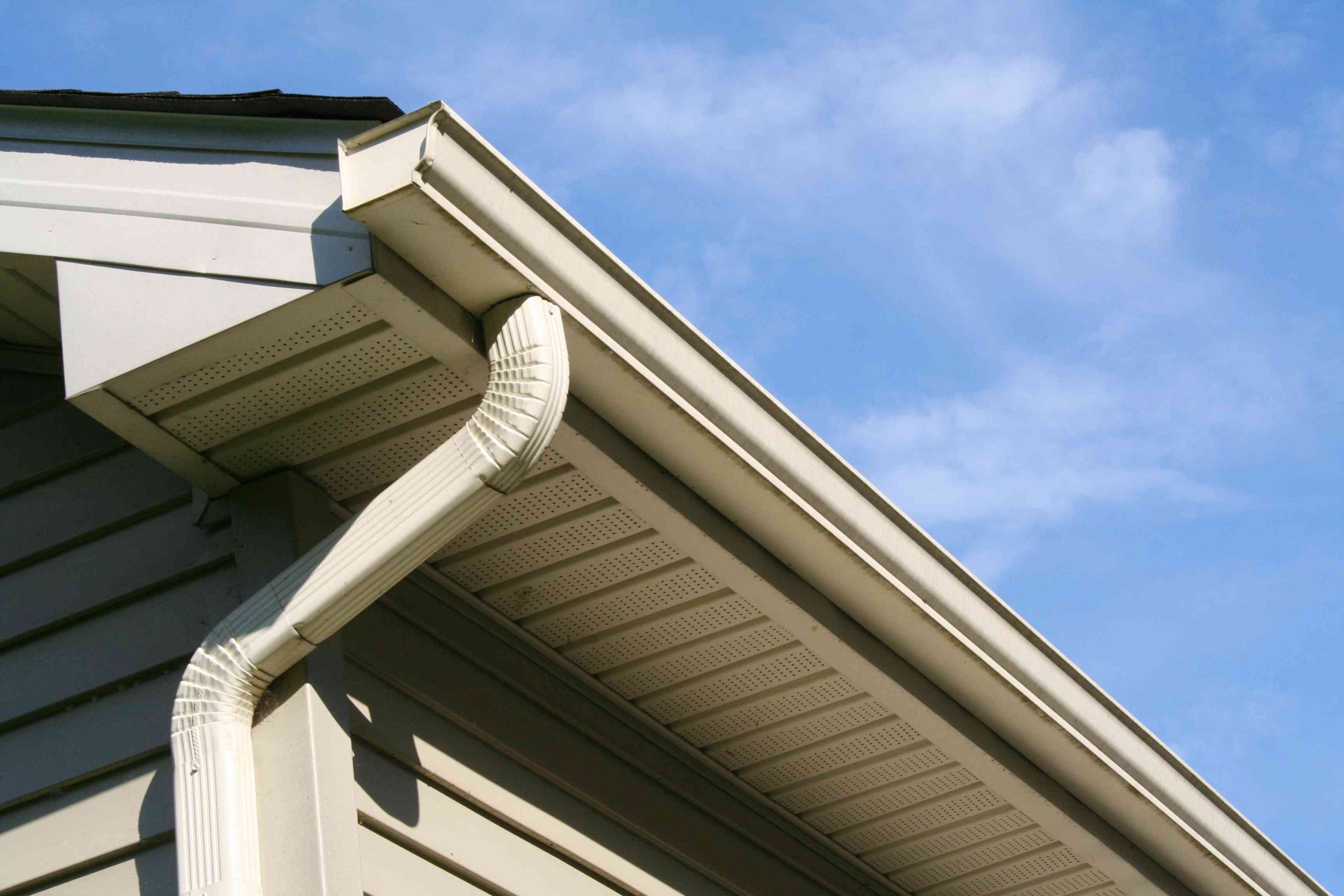
The “K-style” gutter is the modern standard because its flat back fits flush against the fascia and its profile mimics crown molding. However, “Half-round” gutters are often preferred for historic restorations and modern minimalist designs because they are more hydraulically efficient—their smooth, curved bottom allows water to flow faster and move debris more effectively.
Real-World Application Scenarios
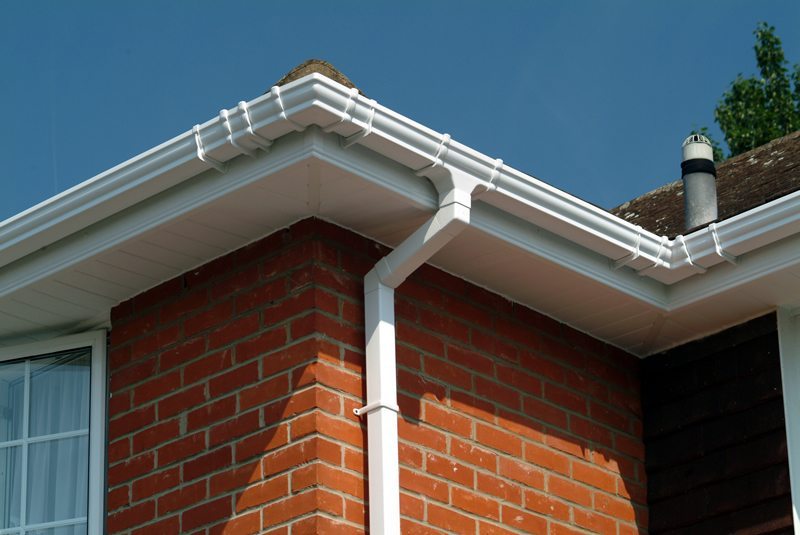
Scenario A: The High-Canopy Forest Zone
In regions like the American Northwest or the English countryside, the primary threat is not just water, but biomass. A plan here must prioritize “Micro-mesh” guards and oversized (3×4 inch) downspouts. Standard outlets will clog within a single season, causing the gutters to overflow and rot the fascia.
Scenario B: The Coastal Salt Air Environment
In coastal regions, aluminum and steel are prone to pitting and corrosion. The “top” choice here is copper or high-grade stainless steel. While the upfront cost is significant, these materials develop a patina that acts as a natural protective barrier against salt-induced oxidation.
The Economic Architecture of Gutter Systems
The pricing of gutter systems is rarely about the linear footage of the metal alone. It is heavily influenced by the “complexity of the roofline”—the number of miters (corners), the height of the home, and the integration of underground drainage.
Estimated Cost Comparison (200 Linear Feet)
| Component | Aluminum (Seamless) | Steel (Galvalume) | Copper (Traditional) |
| Materials | $1,200 – $1,800 | $1,800 – $2,600 | $5,000 – $8,000 |
| Labor & Equipment | $1,000 – $1,500 | $1,200 – $1,800 | $3,000 – $5,000 |
| Accessories (Guards) | $800 – $1,200 | $1,000 – $1,500 | $2,000 – $3,000 |
| Total Project | $3,000 – $4,500 | $4,000 – $5,900 | $10,000 – $16,000 |
Risk Landscape and Failure Modes
Gutter failure is rarely a catastrophic “snap”; it is a slow loss of functionality.
-
Back-pitching: Over time, a house can settle or hangers can loosen, causing the gutter to tilt away from the downspout. Standing water accelerates the corrosion of the metal and becomes a breeding ground for pests.
-
Fascia Pull-off: If the gutter is attached to a fascia board that is already soft from previous leaks, the weight of a heavy rain or snow load can pull the entire system away from the home.
-
Capillary Draw: When a gutter is too full, water can “wick” back upward behind the gutter and into the soffit or wall cavity.
Measurement and Evaluation Metrics
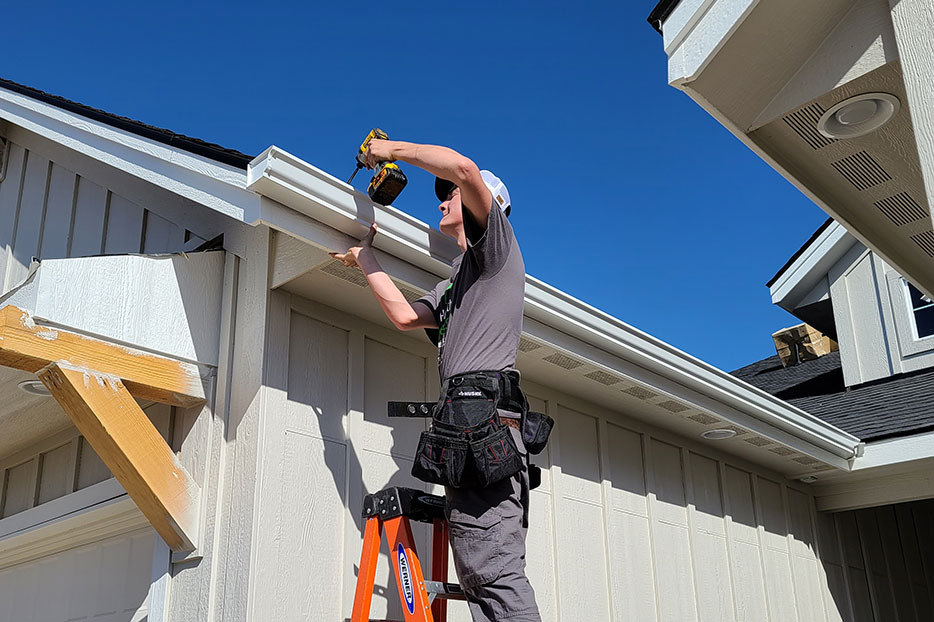
How do you track the health of a drainage system?
-
The “Splash Block” Audit: During a rain event, observing the exit velocity at the downspout. If the water is “glugging” or slow, there is a restriction in the vertical run.
-
Thermal Imaging: Checking for moisture signatures in the soffit after a heavy rain to ensure no water is wicking behind the trough.
-
Foundation Moisture Levels: Using a hygrometer in the crawlspace or basement to see if gutter upgrades have successfully reduced soil saturation.
Common Misconceptions and Oversimplifications
-
“Gutter guards mean I never have to clean them”: No system is 100% maintenance-free. Fine silt and “roof grit” from shingles can still accumulate, and the top of the guards must be brushed off occasionally.
-
“Bigger is always better”: Installing six-inch gutters on a tiny cottage is an unnecessary expense and can look architecturally heavy. Proper sizing is about balance.
-
“Caulk can fix any leak”: Sealants are temporary. If a miter joint is leaking, it often needs to be re-riveted or the entire corner replaced to solve the root cause of the movement.
Final Synthesis and Strategic Judgment
The selection of a residential drainage system is a commitment to the “Long-term Dryness” of the home. In 2026, the most effective homeowners are moving away from reactive repairs and toward “Defensive Water Management.” A truly superior system is one that is invisible in its operation—quietly and efficiently moving thousands of gallons of water away from the structure without drama or failure.
Intellectual honesty requires admitting that there is no “perfect” material. Aluminum is affordable but soft; copper is beautiful but expensive; steel is strong but rusts. The “top” choice is the one that reflects the owner’s commitment to maintenance and the specific environmental burdens of the site. By investing in heavy-gauge seamless materials, high-capacity downspouts, and professional fastening, one ensures that the home’s foundation remains a solid, dry anchor for the life of the property.